
1.0 Geography
1.1 YELLOW
-
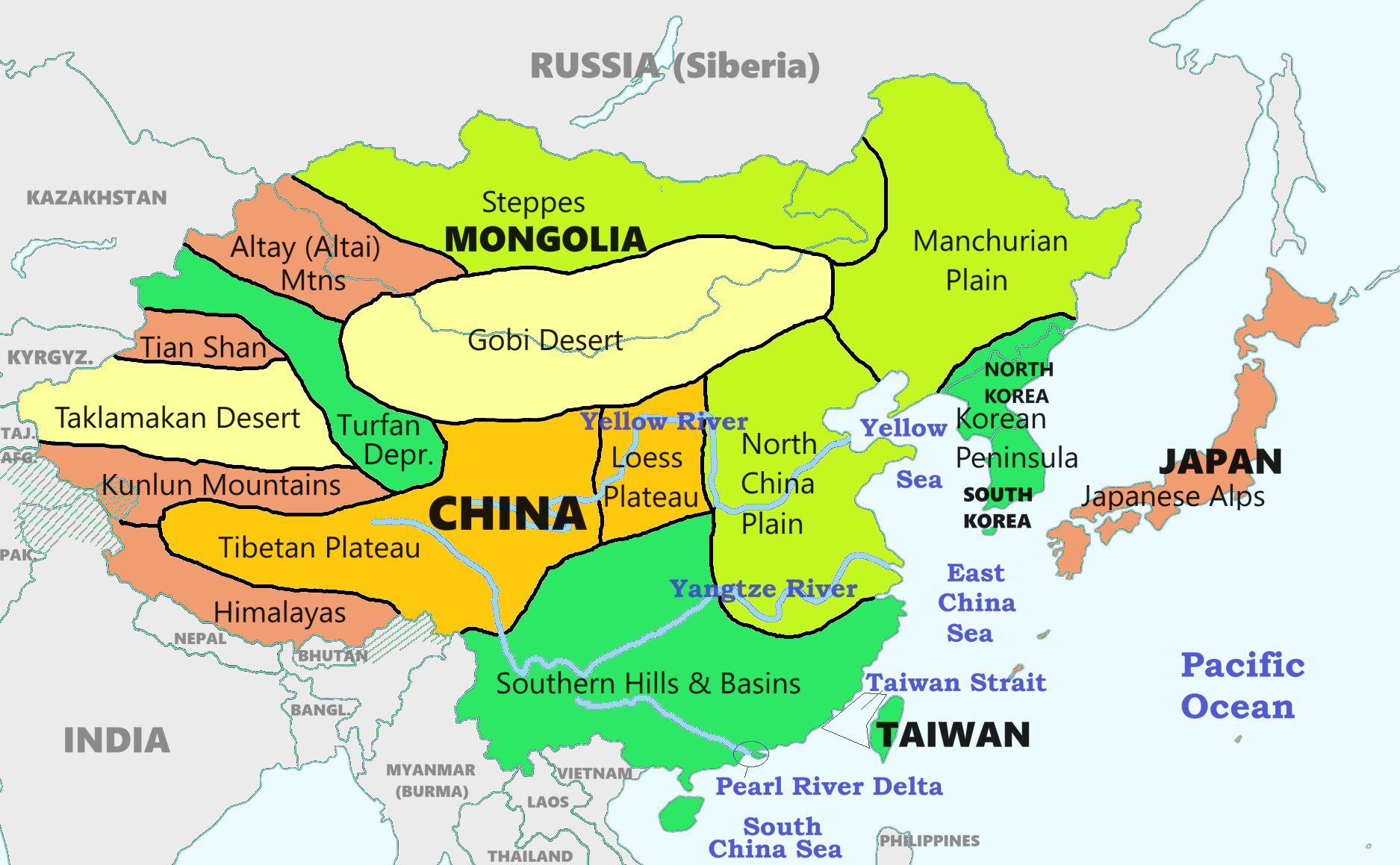
- Yellow River: The second-longest river in China and the sixth-longest river system on Earth (it’s called Huang He in Chinese).
- Easterly Monsoons: A strong easterly wind that brings heavy rain to southern Asia (sometimes called Monsoon Asia) in the summer. Water for rice growing.
- Loess: A loosely compacted yellowish deposit of sediment of which extensive deposits occur in a namesake plateau in eastern China. Good for agricultural fertility, making the Yellow River “China’s Pride.”
- Loss of life from flooding: The Yellow River is called “China’s Sorrow” due to its history of devastating floods that have caused widespread destruction and loss of life. The river’s tendency to overflow is attributed to factors like high silt content, which raises the riverbed, and unpredictable weather patterns.
- Oxbows: U-shaped lakes that form when a river bend is cut off from the main river. They are named due to their shape, like a bow for an ox.
- Westerly water source: The Yellow River, like other major Asian rivers, originates from the Tibetan Plateau, sometimes referred to as “Asia’s water tower”.
- Tibetan Plateau: The highest plateau in the word – it acts as a natural water reservoir, storing water in glaciers and alpine lakes, which then feed the rivers.
- “Roof of the World”: A poetic name for the Tibetan Plateau, due it being the highest plateau in the world.
- “China’s Pride”: A poetic name for the Yellow River due to its agricultural fertility allowing China to grow a lot of food.
- “China’s Sorrow”: A nickname for the Yellow River due to its history of devastating floods that have caused widespread destruction and loss of life. The river’s tendency to overflow is attributed to factors like high silt content, which raises the riverbed, and unpredictable weather patterns.